Industry Standards
Mary MacKillop Today is a member of the Australian Council for International Development (ACFID) and complies with industry standards of good practice, transparency and accountability.
Reconciliation is a responsibility we all share. At Mary MacKillop Today, it is also a natural continuation of who we are, an organisation inspired by Saint Mary MacKillop, whose schools were among the few places in colonial Australia where Aboriginal children were welcomed to learn. Our first Reflect Reconciliation Action Plan is our formal commitment to walk alongside Aboriginal and Torres Strait Islander peoples with respect, humility and courage.
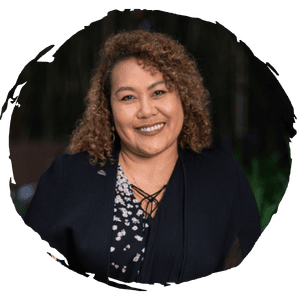
Karen Mundine, Chief Executive Officer, Reconciliation AustraliaThis Reflect RAP enables Mary MacKillop Today to deepen its understanding of its sphere of influence and the unique contribution it can make to lead progress across the five dimensions. Getting these first steps right will ensure the sustainability of future RAPs and reconciliation initiatives, and provide meaningful impact toward Australia’s reconciliation journey.

As we gather in this sacred space, we acknowledge the Traditional Custodians of this land and these waterways, the Cammeraygal people of the Eora nation, and their Elders past, present and emerging.
We acknowledge the footprints that are here long before our shoeprints. We acknowledge the handprints that are here, centuries before our buildings rose. We acknowledge the hearts that love, and spirits embedded in the sacredness of this Country, despite the impacts of colonisation, violence and sorrows that continue to this day.
We acknowledge that cultural authority, traditions and lore were viable and established long before our communities of relationships and leadership came to be. We commit to walking together with Aboriginal and Torres Strait Islander peoples towards greater recognition, voice, truth-telling, treaty and justice.
Our Acknowledgement of Country was developed in consultation with Cassandra Gibbs, a proud Gamilaraay and Yuwalaraay woman and RAP Officer-Facilitator for the Sisters of Saint Joseph.
A Reconciliation Action Plan (RAP) is a framework that helps organisations turn good intentions into practical, accountable action. There are four types, Reflect, Innovate, Stretch and Elevate, that allow organisations to deepen their commitment over time. Ours is a Reflect RAP: the foundational first step, focused on building relationships, listening and preparing the ground for lasting change.
For Mary MacKillop Today, this is not a new direction, it is a deepening of one. Since the 1860s, the Sisters of Saint Joseph have walked with Aboriginal and Torres Strait Islander communities. Mary believed in the dignity of every person, and in reaching those whom others overlooked. Our Reflect RAP carries that same spirit into how we work today, across our partnerships, our programs, our communications, our employment and our supply networks.
We support recognition, voice, truth-telling, treaty and justice as expressed in the Uluru Statement from the Heart, and we apply the United Nations Declaration on the Rights of Indigenous Peoples in our work in Australia and overseas.

Our reconciliation commitment grows from the same principles that guide all our work:
Our plan runs from June 2025 to December 2026 and is built around the four areas that shape every RAP. Here is what we are working towards. (The full plan, including detailed actions and timelines, is available to download below.)
Relationships
Strengthening our partnership-centred approach with Aboriginal and Torres Strait Islander stakeholders and organisations, marking National Reconciliation Week each year, sharing our commitment with supporters, and reviewing our policies to strengthen anti-discrimination and social-justice provisions.
Respect
Growing understanding of Aboriginal and Torres Strait Islander cultures, histories, knowledge and rights through cultural learning for our team and Board, observing cultural protocols, and recognising NAIDOC Week.
Opportunities
Investigating how we can create employment, retention and professional-development pathways for Aboriginal and Torres Strait Islander people, and directing more of our procurement to Aboriginal and Torres Strait Islander-owned businesses.
Governance
Establishing and maintaining our RAP Working Group, to drive delivery, track progress, and report openly to our Leadership team and Board.
Long before this plan, our work with Aboriginal and Torres Strait Islander communities was already underway. Two partnerships show what walking together looks like in practice.
Since 1998, our First Nations Tertiary Scholarship Program has supported Aboriginal and Torres Strait Islander students with what they need most, whether that is a laptop, textbooks, utilities or childcare, so they can stay in study. The scholarships are equity-based rather than merit-based, reaching students affected by remoteness, disability, sole-carer responsibilities or interrupted schooling, and they last the full length of a student’s degree.
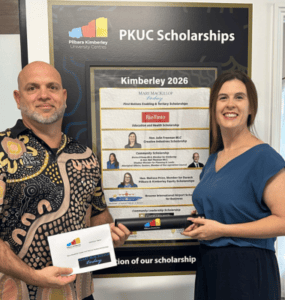
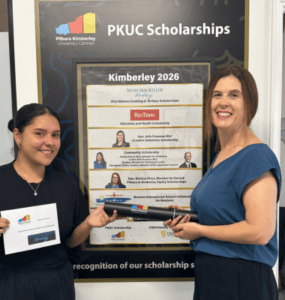
Today the program partners with universities and training providers that offer culturally safe, wrap-around support, currently Deakin University, James Cook University (Cairns and Townsville), and Pilbara Kimberley University Centres supporting students from regional and remote Queensland, Victoria and Western Australia.

“I want my story to inspire all the young mothers out there to know they can achieve anything with determination and support. It’s never too late to go after what you want.”

What it would do for me is relieve some of the financial stress. Things like this stretch a long way. It helps with relationships. Financial stress is a big thing on relationships.

There have been times where this is all really hard. But having the scholarship will really help me to commit. It’s like… a reason to keep going.

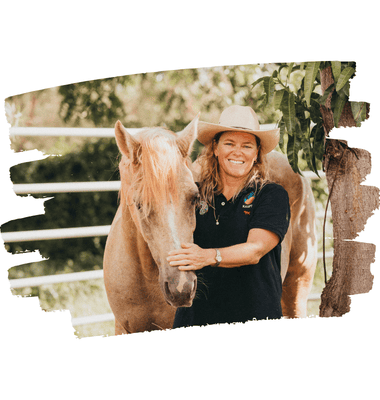
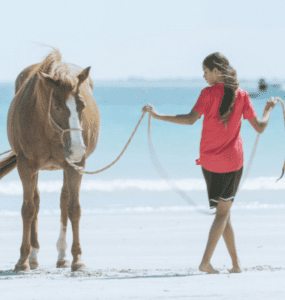
In the Kimberley, we partner with Professor Juli Coffin, a proud Aboriginal Nyangumarta woman and respected researcher, on Yawardani Jan-ga, an Equine Assisted Learning program that creates a culturally safe space for the social and emotional wellbeing of Aboriginal young people.
More than 3,500 Aboriginal young people have taken part, and more than 30 local Aboriginal people between Broome and Halls Creek have been trained to deliver the program, a model led by community, for community.
A Reflect RAP is about laying strong foundations. In our first year, we have begun to turn commitment into practice:
There is much more ahead and we will keep reporting on our progress as we go, including through Reconciliation Australia’s annual RAP Impact Survey and our own impact reporting.
The artwork on this page was created by Ursula Morgan, a proud Yidinji woman from Far North Queensland and one of our First Nations Tertiary Scholarship students, who studied art at Deakin University and was offered a place in its Honours program. Her work brings together the many cultures Mary MacKillop Today walks with, First Nations, Peruvian, Timorese and Fijian, through hand-drawn cultural designs. Ursula continues to study art, focusing on art for healing, so she can help others in need.

Our Reflect RAP sets out every action, timeline and responsibility in full. We publish it openly as part of our commitment to accountability and transparency.
Reconciliation is a journey we take together. Here's how you can be part of it:
Support a First Nations student through our Scholarship Program
Sign up to our Newsletter for updates on our reconciliation journey
Learn more about our work across Australia
Jane Woolford, Chief Executive Officer, Mary MacKillop Today“This is our first Reflect Reconciliation Action Plan, and we are proud to be taking such a significant step in our journey towards reconciliation in Australia. Inspired by the values of Saint Mary MacKillop, our work is rooted in the belief that all people deserve compassion, dignity and respect.
We recognise the unique spirituality, strengths and collective cultural wisdom that Aboriginal and Torres Strait Islander peoples bring, and we are dedicated to creating programs that promote equity and self-determination. Reconciliation is a responsibility for everyone, and we encourage our team members, volunteers, partners and supporters to join us in bringing about lasting change.”

From the Sisters of Saint Joseph, offered at the launch of Mary MacKillop Today’s Reflect Reconciliation Action Plan — a prayer of listening, humility and courage, honouring Saint Mary MacKillop, Father Julian Tenison Woods, the Josephite Sisters, and the First Nations peoples of this land.