
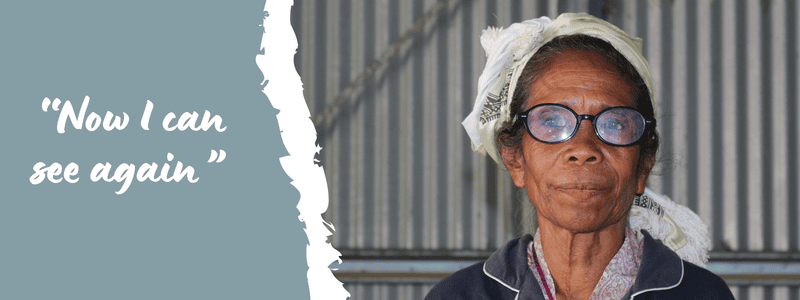
In a rural village in Timor-Leste, Imelda spent seven years unable to see the faces of her children and grandchildren. Today she is cooking, gardening and moving through her community with confidence once more and she wants other people in remote areas to have the same chance.
This is her story.
Seven years in the dark
Imelda, 73, lost her sight after a small piece of an aluminium pot scrubber flew into her eye while she was cleaning a cooking pot. The injury was serious, and although her family sought treatment locally no one could help her.
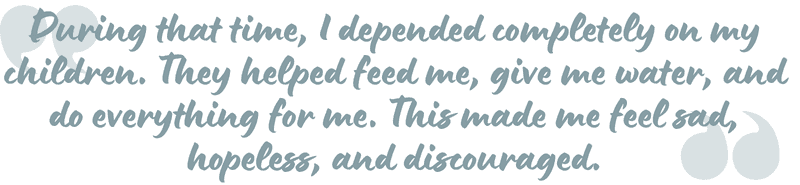
For seven years, she rarely left home. She could not recognise people when they came close, and she could no longer cook, wash dishes or tend her garden which was the everyday work that had long anchored her days.
Imelda’s experience is not unusual. For many people living in Timor-Leste’s remote villages, distance, cost and limited services stand between them and the health care they need. When treatment is out of reach, a condition that could be prevented or treated can quietly reshape an entire life.
A screening that changed everything
Mary MacKillop Today’s Women’s Livelihoods Project supports people in Ermera to build stable incomes through skills such as sewing and cooperative finance. When team members noticed that vision problems were making this work harder for some participants, the Livelihoods Program partnered with the Eye Department at Dili National Hospital to bring a free eye screening campaign to the community which was open to project participants and the wider community alike, including Imelda.
At the screening, an ophthalmologist and medical team assessed Imelda, wrote her a referral to the National Hospital on the spot, and supported her to travel to Dili for surgery. She was also fitted with prescription glasses, and learned how to care for her eyes, knowledge she now puts into practice every day.
“After the ophthalmologist and medical team came to interview me, I received a referral letter to the National Hospital on the spot, and they helped me travel to Dili for surgery.”
More than sight restored
Imelda immediately underwent surgery that gave her back far more than her vision.
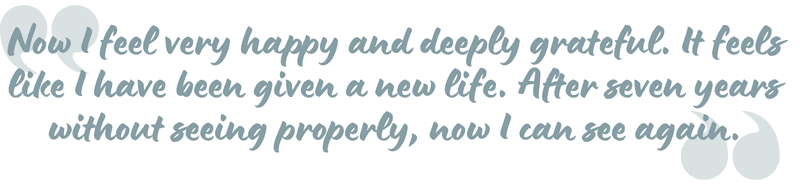
“Now I can see again, see my family, children, and grandchildren. I can do simple activities such as cooking, washing dishes, making fire, gardening, and managing tasks at home by myself. I no longer feel isolated, because now I can interact with people and participate again in community life.”
For Imelda, independence and belonging are inseparable. Being able to see means being able to contribute and care for her family, share in her community, and shape her own days.
 Health care as a pathway to independence
 Health care as a pathway to independence
Imelda’s story shows how closely health and livelihoods are connected. For the women in Ermera, clear sight is not a luxury, it is what makes it possible to sew, to keep financial records, to run a household and to earn a living. Restoring sight restores the ability to provide.
It is also a reminder that access to health care should not depend on where a person lives. Imelda is clear about what she hopes comes next.
“My suggestion is that programs like this continue helping people in remote communities who still do not have access to health treatment. Many people continue to suffer as I once did and need support, information, and hope.”
Continue Mary’s legacy of hope
Imelda describes Mary MacKillop Today as “not just an organisation, but a source of hope for people who live in remote areas.” Her second chance was made possible by supporters who believe, as Saint Mary MacKillop did, in walking alongside people with courage and dignity.
Your gift can help bring vital health care, training and opportunity to more communities in Timor-Leste and beyond, so that more people like Imelda can live full, connected and independent lives.
Donate today and help open the door to independence for people in remote communities.